



Cross Marketing Group Inc. Global HQ
Global Sale Manager
Kana Enami
Halloween is over and the city of London is now in full Christmas mode. The city is beginning to glow with winter lights. The German Christmas Market*, which has recently become popular in Japan, is one of the most popular Christmas events in London, with large parks and amusement parks in London.
However, winter in Europe is not all fun and games. Many people have an image of London as being cloudy and dark. Especially in winter, the sun rises later and sets earlier, so the time when it feels dark is longer. These days, it finally starts to get light around 8:00 in the morning, and the sun begins to set at 3:00 pm. This means that it is dark both when I go to work and when I leave the office, so I have little time to bask in the weekday sun. A daily study of sunlight hours in the UK reveals that in December and January, there are only about two hours of sunlight per day. The average monthly sunshine hours for Tokyo in January 2017, as reported by the Japan Meteorological Agency, is 226.7 hours, so simply dividing by 31 days reveals that there is an average of 7.3 hours of sunshine per day. This is about four times as long as in the United Kingdom.
*A Christmas market that originated in Germany, where each store looks like a log cabin and sells Christmas-related goods, sweets, hot wine, and other items.
Figure 1: Daily sunshine hours (UK)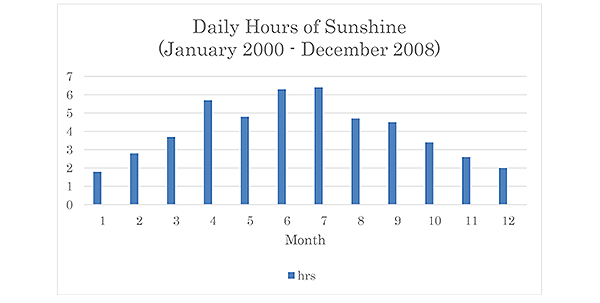
sourse:Whether online

The National Health Service (NHS) in the U.K. says that during the winter months (October to early March) when sunlight is scarce, people do not get enough vitamin D. It recommends supplementation through diet or supplements. Prevention, a healthy lifestyle magazine published in the U.S. since 1950, lists the following symptoms of insufficient vitamin D intake
-Easily depressed
-Harder to cure cancer
-More likely to develop prostate cancer
-Higher risk of dementia and Alzheimer's disease
-Higher risk of pneumonia and heart disease
-More likely to become depressed
In particular, as the term "winter depression" suggests, according to a Japanese company I spoke to when I arrived in the UK, those who are stationed in Europe during the winter tend to be more prone to mental illness.

The NHS has published recommendations for both dietary supplementation and supplements. Dietary sources include oily fish such as salmon, mackerel, and cod, red meat, liver, and egg yolks; 8.5-10 mcg per day is recommended, and supplements are recommended for infants and children in all seasons.
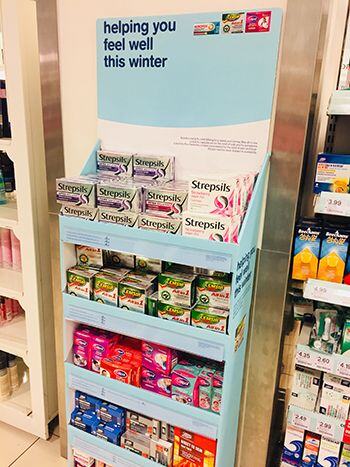
When I went to the hospital the other day with a cold, the doctor also recommended that I take a vitamin D supplement. When I went to the drugstore, the number of faces in the vitamin section seemed to have expanded since the summer. When I asked my French and German colleagues at work, they told me that they have been taking vitamins in the winter since they were in France, so apparently it is not just a British problem.
Source:Kantar Media © Statista 2017
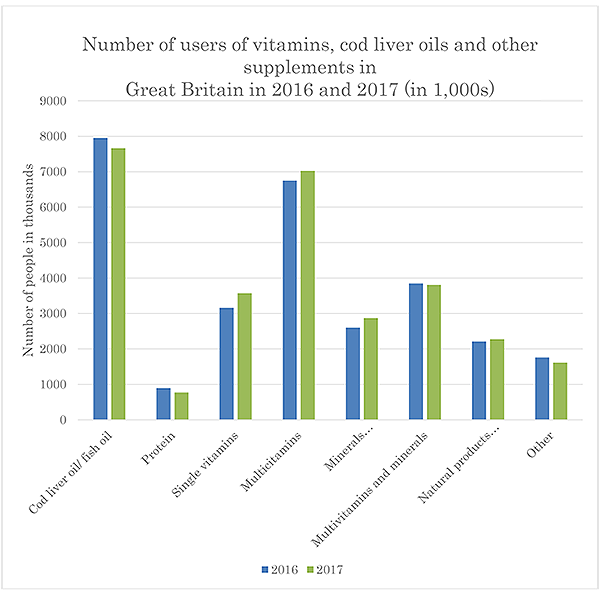
According to a survey published by Kantar Media at Statista 2017, when looking at the most commonly taken supplements in the UK by type, the number of people taking cod liver oil (Cod Liver Oil)/fish oil, multivitamins and single vitamins is higher than other supplements such as protein Cod Liver Oil/fish oil, multivitamins and single vitamins are more common than other supplements such as protein. Cod Liver Oil is an oil that is very rich in omega-3 fatty acids, EPA and DHA, and is also rich in vitamins A and D, according to the Institute of Nutritional Medicine.
Figure 2: Supplement types taken in the United Kingdom
Source:Kantar Media © Statista 2017
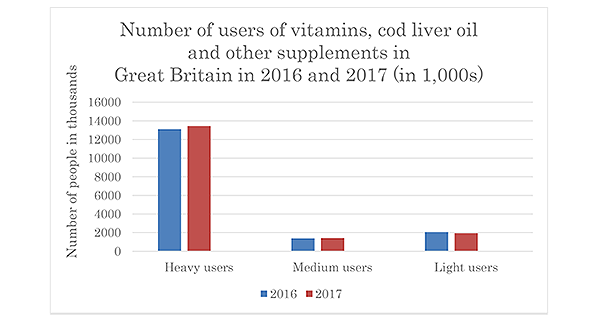
Many people may think that nutrition is obtained from food, but as recommended by the NHS, it is clear that many people consider supplements as important as food. As data on the familiarity of supplements, it may be noted that there are a great many heavy users of supplements including fish oil and vitamins in the UK.
Figure 3: Frequency of supplement intake
Source:Kantar Media © Statista 2017
In July 2016, the British government recommended vitamin D. Vitamin D supplements are now available in an increasing number of places, and can be purchased in supermarkets, drugstores, and on the Internet. Vitamin drops are available for babies, and several agencies, including the NHS, run a website called Healthystart, which appears to offer it free of charge to low-income families.

The company is also promoting efforts to consume vitamins, and our company provides fruit to employees every Monday morning. This initiative was started to cheer them up on Mondays when they tend to feel down, but in winter, it is also meant to prevent colds. I also heard that vitamin D supplements are available at my friend's company and can be taken freely.
Although vitamin intake has long been recommended in Japan, I suspect that few people take nutritional supplements like this with the seasons and weather in mind. It is a given that different countries have different climates and cultures. However, if you learn about the lifestyle changes and consumer awareness associated with seasonal changes in countries where you are aiming to enter a new market or expand sales, you may see differences from Japan and encounter opportunities you had not considered before. When looking for new ideas, we recommend researching the daily lives of ordinary consumers.
See:
■JMA data, 2017, monthly values since the start of observations
http://www.data.jma.go.jp/obd/stats/etrn/view/monthly_s3.php?prec_no=44&block_no=47662&year=&month=&day=&view=p4
■NHS, 2015, how to get Vitamin D from sunlight
https://www.nhs.uk/Livewell/Summerhealth/Pages/vitamin-D-sunlight.aspx
■Prevention, 2017, 10 worst things that can happen when you don’t get enough Vitamin D
https://www.prevention.com/health/vitamin-d-deficient
■NHS, 2016, The new guidelines on vitamin D – what you need to know
https://www.nhs.uk/news/food-and-diet/the-new-guidelines-on-vitamin-d-what-you-need-to-know/
■kanter Media, 2017, Vitamins and cod liver oils in Great Britain
https://www.statista.com/statistics/724327/users-of-vitamins-cod-liver-oils-and-other-supplements-britain-uk/
■ Institute of Nutritional Medicine, 2004, Cod Liver Oil
http://www.nutweb.sakura.ne.jp/iframe/03_ippan/01nutrio/tara.html
*All above, accessed December 2017.
<Company Profile>
Cross Marketing Group Inc.
10 Valentine Place , London SE1 8QH The United Kingdom
+44(0)7712 358 284
http://www.cm-group.co.jp/