

If you are going on a business trip or transfer from Tokyo to Kansai or Kansai to Kanto, learn the basics beforehand so that you will not be surprised by the culture gap.
Here we will explain the differences in lifestyles and values.
Utilities and water expenses
According to a survey conducted by the Ministry of Internal Affairs and Communications in 2022, there was little difference in expenditures between Kansai and Kanto in two areas: city gas and electricity. However, the amount spent on propane gas tends to be lower in the Kansai region.
Kerosene and water bills were also among the items with lower expenditures in the Kansai region. The difference in kerosene consumption in the Kanto region is about 4,000 yen, due to the greater amount of kerosene used in the Kanto region. The difference in water bills is about 2,300 yen.
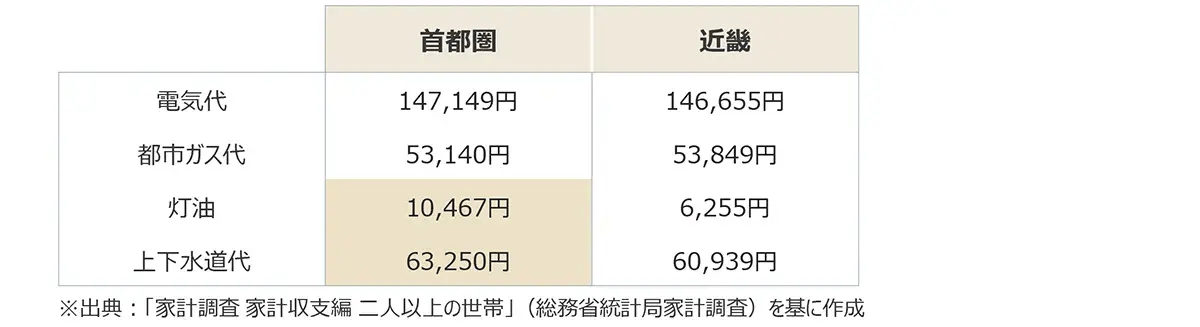
By item, there is no significant difference between the Kansai and Kanto regions overall, although there is a tendency for some items to be lower in the Kansai region. The overall consumption expenditure in Kansai was 3,508,721 yen, almost the same as the national average of 3,490,383 yen.
Source: "(Item Classification) Table 6: Annual Expenditure Amount and Quantity of Purchases by Item per Household by City Class, Region, and Prefectural Office (Households with Two or More Members)" (Household Survey, Statistics Bureau, Ministry of Internal Affairs and Communications)
Source: "Household Budget Survey, Household Income and Expenditure Section, Households with Two or More Members.
Rules for using women-only vehicles in Kanto and Kansai
Many railroad companies in both Kansai and Kanto have women-only cars on their trains. However, since the rules and locations of these cars differ among railway companies, care must be taken when riding in these cars.
For example, if you are transferred from the Tokyo metropolitan area to Kansai for work or on a business trip, you may inadvertently board a women-only car as a result of your normal riding style.
In the Kanto region, the first or last car in most cases is reserved for women. In Kansai, on the other hand, women-only cars are often located closer to the center of the train. In some cases, you may get off the escalator and board the train from the entrance in front of you, only to find that it is a women-only car.
How to ride the escalator
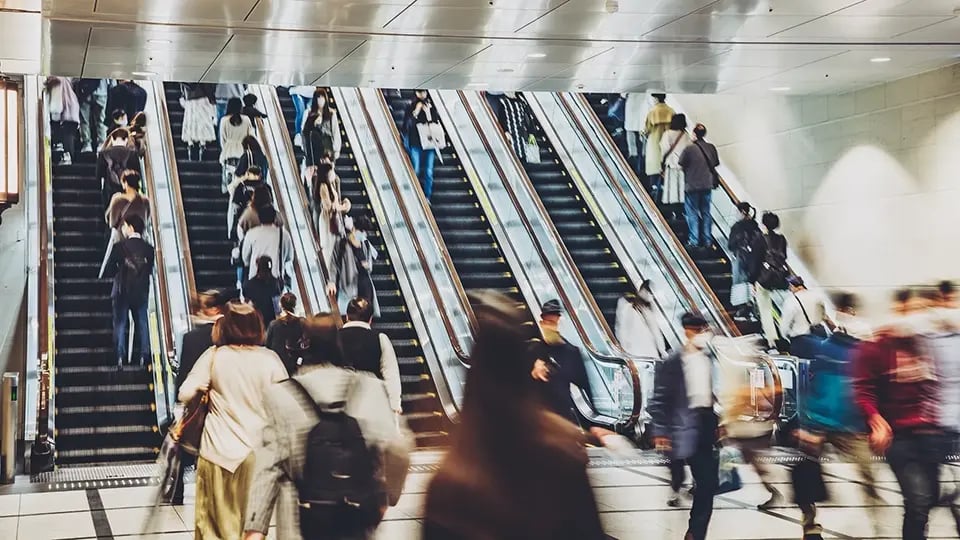
One of the most frequently discussed differences in public facilities is how to ride an escalator. Normally, the recommended way to ride an escalator is to stand on either side. However, in commercial facilities, train stations, and other places with many users, it is more common to leave one side open for walkers.
Another difference between Kansai and Kanto is "which side of the escalator to stand on. In the Kanto region, people stand on the left side of the escalator, while in the Kansai region, people generally stand on the right side.
There are various theories as to the origin of this custom. One theory is that the left side of the escalator in the Kanto region is a remnant of the manner of samurai warriors to avoid sheathing (trouble caused by swords clashing with each other). The right side of the road in Kansai is said to be the result of the spread of the practice by major railroad companies and the influence of the etiquette at the Osaka World Exposition.
toilet paper
Purchasing trends for toilet paper also differ between the Kansai and Kanto regions. According to a survey conducted by Planet, Inc., single paper is purchased more in the Kansai region, while double paper is more expensive in the Kanto region.
The survey by the Ministry of Internal Affairs and Communications shows that the amount spent on toilet paper by region is 4,200 yen in the Kansai region (Kinki), where single-paper households tend to buy more, and 4,434 yen in the Kanto region, where double-paper households tend to buy more. The region with the highest percentage of double-paper users is Tokai, with an expenditure of 4,478 yen.
Source: "From Planet Vol. 135 <Attitude Survey on Toilet Paper>"
Source: "<Item Classification> Annual Expenditure, Purchase Quantity and Average Price per Household by Item" (Household Survey, Statistics Bureau, Ministry of Internal Affairs and Communications)
Difference in starting fare
The difference in transportation conditions can also be seen in the starting fare on transportation IC cards. In the Kansai and Kanto regions, JR West and JR East are operated by different companies, even though they are part of the same JR company.
In JR West, the starting fare for ICOCA (Kansai version of SUICA) is 1 yen. Even if your balance is insufficient, you can get on the train and pay the balance at the fare adjustment machine when you get off the train.
On the other hand, JR East does not allow you to board a train unless you have enough money left over to cover the initial fare. Therefore, those who are transferring from the Kansai region to the Kanto region on a business trip or returning home after a long absence need to be careful about insufficient balance on their transportation system IC cards.
When traveling to other regions on business, many people look forward to the food.
There are some differences in food culture between the Kansai and Kanto regions.
Dark and light
The type of soy sauce used in daily life differs between Kansai and Kanto. Even instant udon and soba noodles are seasoned differently in the Kansai and Kanto regions.
In Kansai, light soy sauce is commonly used, which is lighter in color and more elegant. Udon and soba soup stock is also characterized by a lighter, clearer color than in the Kanto region. In the Kanto region, dark soy sauce is the most common, with a darker color and a more robust flavor. Udon and soba dashi is also darker in color than in the Kansai region.
Difference of Dashi
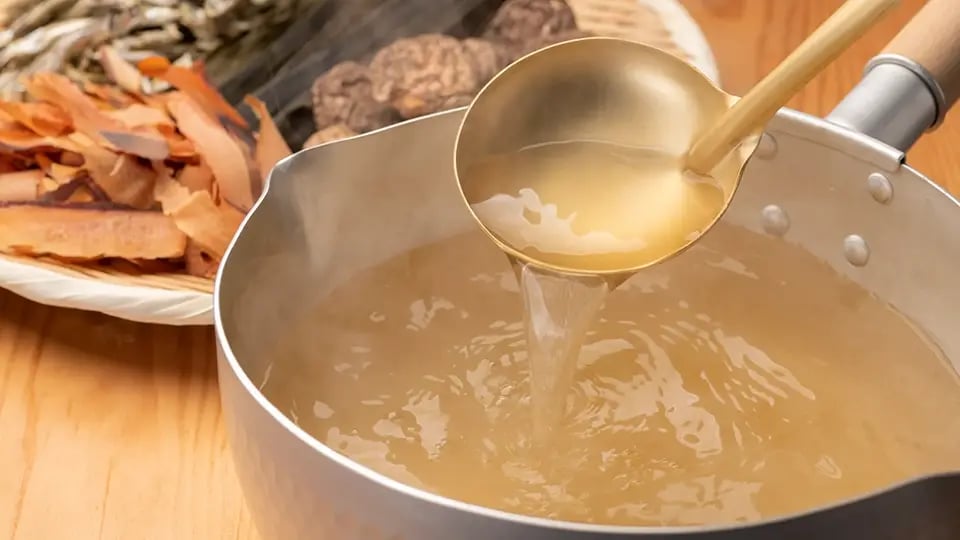
Japanese cuisine is fundamentally based on dashi culture. Dashi culture differs between the Kansai and Kanto regions, and is said to be "bonito flakes in the east and kelp in the west.
The reason for the difference in dashi culture is the difference in water hardness due to soil and topography. While Kansai has soft water that makes it easy to make kombu dashi, Kanto has hard water that makes it difficult to make dashi, and thus katsuobushi became the mainstream. Another theory is that kombu was used as a gift to the Imperial Court and was not available in the Kanto region.
Bread thickness
Bread thickness tends to be thicker in Kansai and thinner in Kanto. In terms of consumption, more bread is consumed in the Kansai region than in the Kanto region.
According to a survey of households with two or more members, the Kansai cities of Kobe, Kyoto, and Nara account for the top three cities in terms of consumption per household. The aforementioned preference for thicker slices also contributes to Kansai's high bread consumption.
Source: "Household Survey (Households of two or more persons), Statistics Bureau, Ministry of Internal Affairs and Communications.
Meat Consumption
In the Kanto region, Chinese buns made with pork are called "nikuman," but this term is not understood in the Kansai region. In Kansai, it is more common to call them "pork buns.
In Kansai, people tend to think of meat as beef, and some people feel uncomfortable calling it "nikuman" when it contains pork. According to the aforementioned consumption survey conducted by the Statistics Bureau of the Ministry of Internal Affairs and Communications, beef is consumed more in the Kansai region and southward, while pork is consumed more in the Kanto region and northward, mainly in the Tokyo metropolitan area and Hokkaido.
Appetizers and tsukidashi
If you are aware of the izakaya culture, you may notice minor differences between Kansai and Kanto. For example, a small bowl of food served mainly as "oshoshi" in the Kanto region is called "tsukidashi" or "sesuke" in the Kansai region.
New Year's Eve Dinner Menu
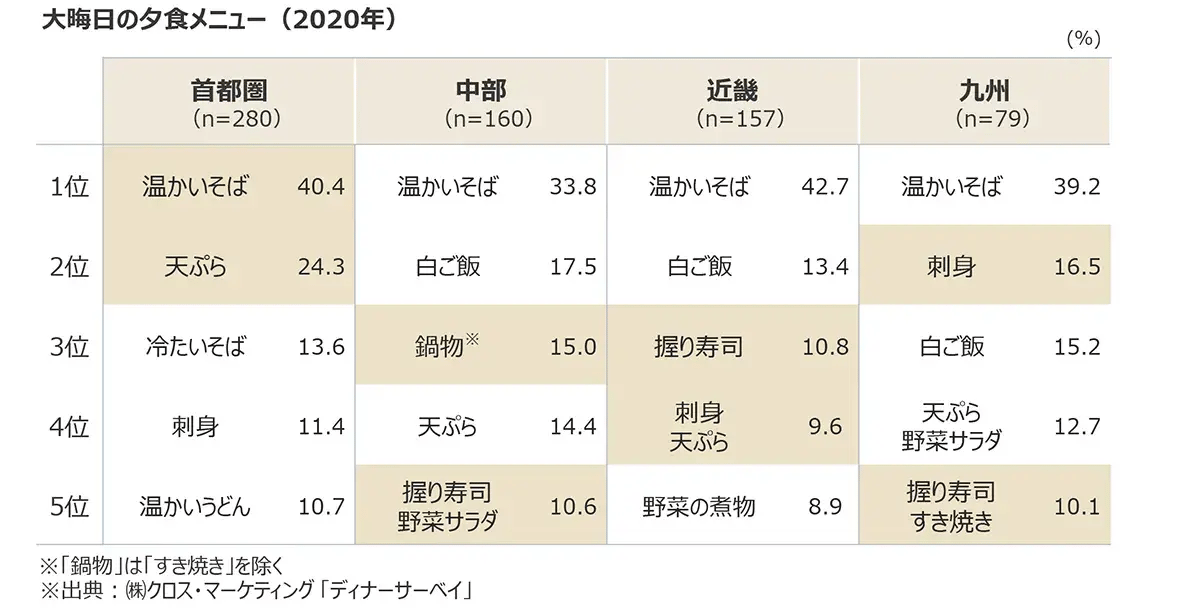
The food eaten on New Year's Eve also differs from region to region. Both the Kansai and Kanto regions eat hot soba noodles for good luck. Hot soba is the number one dinner menu item on New Year's Eve in both the Kansai and Kanto regions.
The major difference is in the dishes other than soba. In Kansai, nigirizushi (hand-rolled sushi) and vegetable stews are the most common dishes, while in Kanto, sashimi tends to be served in many households.
Setsubun dinner menu
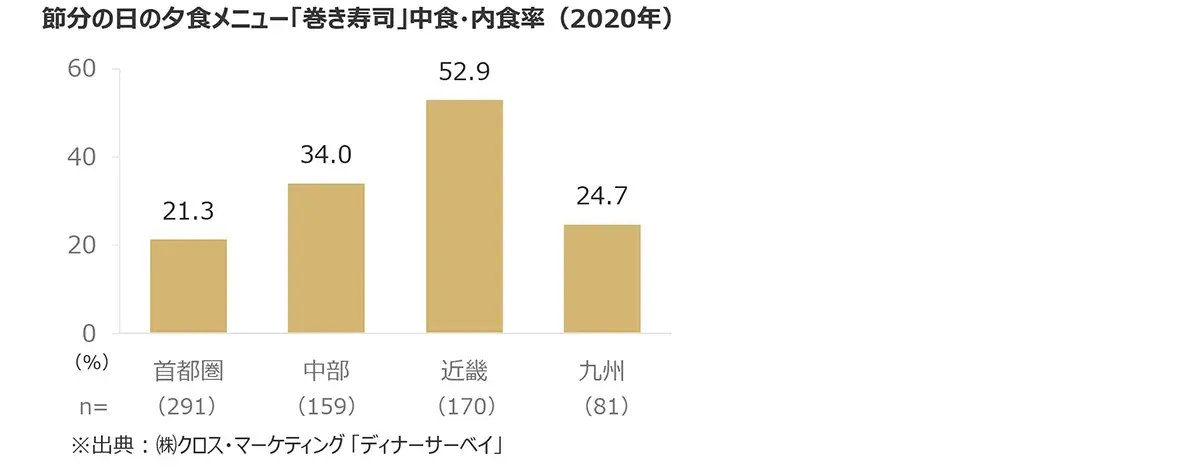
The menu eaten on Setsubun also differs greatly between the Kansai and Kanto regions. In the Kansai region, there is a long-standing custom of eating ehoumaki (sushi rolls) on Setsubun, whereas there was no such custom in the Kanto region.
It was around the 1990s that ehoumaki became well known throughout Japan. Since then, it has become a popular Setsubun tradition.
More than 50% of households in Kansai eat ehoumaki, while only about 20% of households in other regions including Kanto eat it.
The difference between a fox and a tanuki
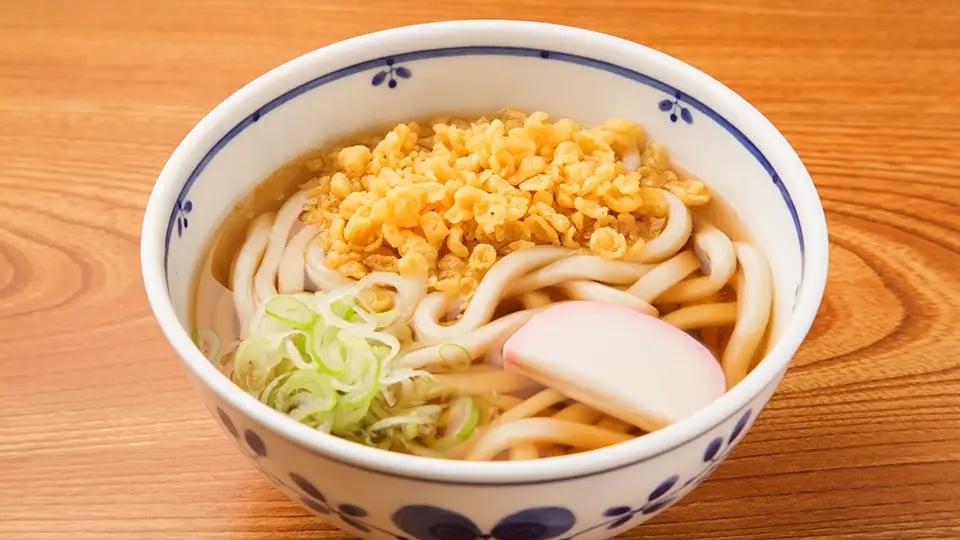
When ordering udon, be aware of the differences between Kansai and Kanto. If you order Tanuki udon in Kansai, you may be told that there is no such thing.
In Kansai, there is no such thing as Tanuki Udon in Kanto, and what you get when you order Tanuki is soba with deep-fried tofu on top. In Kansai, a dish similar to tanuki udon is called "haikara udon" and is served.
As a partial exception, ankake udon with deep-fried tofu may be served in Kyoto.