
This English section features selected content from our Japanese website.
For a comprehensive overview and access to all pages, please visit our Japanese site.

What is 4C Analysis? Explanation of features, analysis methods, and best practices

Last Updated: 2025 / 03 / 25
Published:  2022 / 10 / 25

20221025_01-3
writer210210210_1-Dec-13-2024-01-16-07-0281-AM
Representative, Success Partners for Attracting Customers
Worked at ASP, a store marketing tool, following up with 500 customers and assisting with implementation. 
Then, in 2009, founded Success Partner, assisting with attracting customers and marketing for actual stores.

Kota Ogata

In a world where products and services are so commonplace, developing a marketing strategy is a lifeline. In order to gain market acceptance and market share as quickly as possible, the "customer perspective" is extremely important, and the "4C analysis" is useful in this regard. 4C analysis allows you to develop marketing strategies based on the customer perspective, defining development, pricing, distribution, and even information dissemination. The 4C analysis can be used to develop marketing strategies by defining the customer's perspective on development, pricing, distribution, and information dissemination. Here are some other analyses related to the 4C analysis, as well as some pointers on how to actually conduct a 4C analysis.

What is 4C Analysis?

4C Analysis is a framework for analyzing products and services from the customer's perspective when developing marketing strategies.

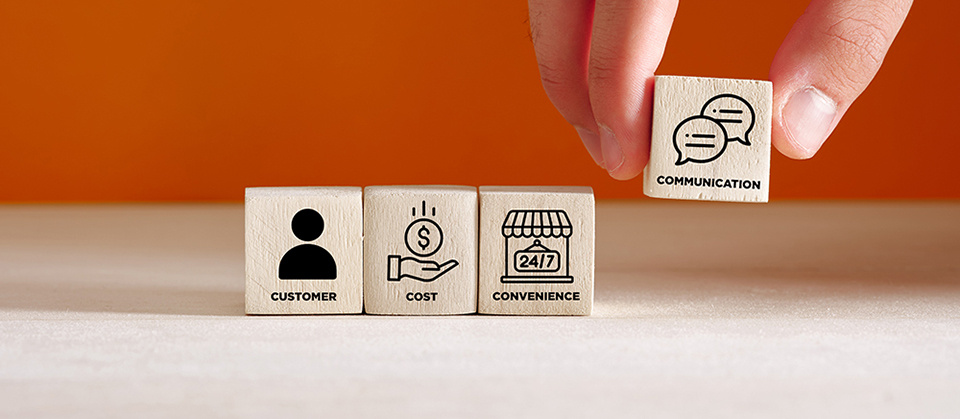
The "4C" in 4C Analysis stands for "Customer Value," "Cost," "Convenience," and "Communication," all of which have a significant impact on the customer's decision to purchase a product or service. The 4C analysis is used in conjunction with the 4C analysis.

The 4P analysis, which was proposed in 1960, is a framework that is often used in conjunction with 4C analysis, but this framework focuses on the perspective of the seller or company. As times changed and a customer-centric approach took root, the 4C analysis was proposed in 1993.

Elements of 4C Analysis

As mentioned above, the 4C analysis has four components: customer value, cost, convenience, and communication. Let us explain each of them in detail.

Customer Value

Customer value refers to the value that a customer holds for a product or service. Customers seek a variety of values from multiple factors such as performance, quality, design, after-sales service, and brand strength of the product or service. Therefore, it is important for companies to understand what customers are looking for and incorporate it into their products and services.

Cost

Cost refers to the cost (price or price) a customer has to pay to obtain a product or service.

Cost is tied to customer value. For example, if a customer perceives sufficient customer value, even a high price tag may be perceived as "cheap" by the customer, and he or she may purchase the product. On the other hand, if customer value is not well perceived, even a low price will not lead to purchase.

Therefore, it is necessary to set prices from the viewpoint of customer value of the product or service, not only from the viewpoint of setting high prices to make a profit.

Convenience

Convenience does not mean the ease of use of the product or service itself, but whether the process of purchasing the product or service is smooth and without inconvenience.

For example, when purchasing a particular product, people tend to choose a store that is conveniently located near their home rather than a store that is distant from their home and less convenient.

For example, if you want to increase the convenience of your e-commerce site, you can make it easier to use by adopting an easy-to-understand design throughout the site, offering more payment options, and making it easier to connect with customer support.

Communication

Communication is the process of making contact with customers through holding events, sending out messages on social networking sites, sending email newsletters, and so on.

Proactively increasing contact with customers and implementing communication will help expand awareness of your products and services, which will have a positive impact on purchases. It also makes it easier to gather feedback from customers, which helps in growth hacking to improve products and services.

At this point, what is important is whether the medium is easy for customers to communicate with and whether it delivers content that is valuable to them. By verifying the effectiveness of these efforts and making improvements as necessary, you can expect to be effective in building relationships with your customers.

Differences from 4P Analysis, 3C Analysis, and 5C Analysis

There are several major frameworks utilized in marketing analysis that are similar in name to the 4C analysis, including the 4P analysis, which is the counterpart to the 4C analysis, and the 3C and 5C analyses, which analyze the external environment. Let's take a look at the differences between them.

4P analysis

4P analysis is a framework consisting of four elements: Product, Price, Place, and Promotion.
It is so widespread that it is often referred to as the "4Ps of the marketing mix," and is utilized when planning company-oriented marketing. In recent years, as customer-centric thinking has become more common, the opposite of 4P analysis, the customer-centric 4C analysis, has become popular.

The four components of 4P and 4C analysis are different: in the case of 4P analysis, the viewpoint is from the company side, while in the case of 4C analysis, the viewpoint is from the customer side. However, since both the company's and the customer's perspectives are important in marketing, 4C analysis and 4P analysis are used together in most cases.

3C Analysis

The 3C Analysis is a framework consisting of three elements: Customer (target customers or market), Competitor (competitors), and Company (the company), and is used to analyze the relationship between the external environment and the company.

The 3C analysis is useful in understanding the current situation by analyzing the strengths and weaknesses that the company has in comparison to its competitors with respect to market trends.

Even if you develop an attractive product or service, if you do not understand market trends, misread customer value, or develop products similar to those of your competitors, you will not be able to survive the competition and will not sell well.

First, use 3C analysis to understand market trends and competitors, and then conduct 4P analysis and 4C analysis, which will also help you differentiate customer value when developing products.

5C Analysis

5C Analysis is a framework that adds two elements, Customer's Customer and Community, to the three elements of 3C Analysis, and is used to analyze and investigate external factors in more detail.

Intermediate customers are those that come between the company and its customers, such as distributors, wholesalers, and retailers. Another area refers to external factors that affect the business, such as social changes, laws and regulations, population changes, public opinion, and the economy.

The 5C analysis is more detailed than the 3C analysis and can more accurately identify key success factors (KFS).

Key points for conducting a 4C analysis

When conducting a 4C analysis, the following points should be clarified in advance.

Clarification of Targets

In marketing, a clear target audience helps create products and services that customers with specific needs find attractive. 4C analysis aims to develop products and services from the customer's perspective, so targeting is a prerequisite for the first step.

When proceeding with targeting, the first step is to establish personas. A persona is an image of a typical person in the target market. By establishing personas, it is possible to create a concrete image of the target audience, and it is easy to share this image with the team. The key to persona creation is to narrow down specific elements such as name, gender, age, job, position, hobbies, family structure, lifestyle, etc., and recall them as if they were a single personality.

Clarify your company's position with STP analysis

A product or service cannot meet all customer needs. Therefore, it is common to divide the market into smaller segments and focus on specific markets. Furthermore, by clarifying the difference in standing from other companies in that market, customer value can be concretized and a highly accurate 4C analysis can be performed.

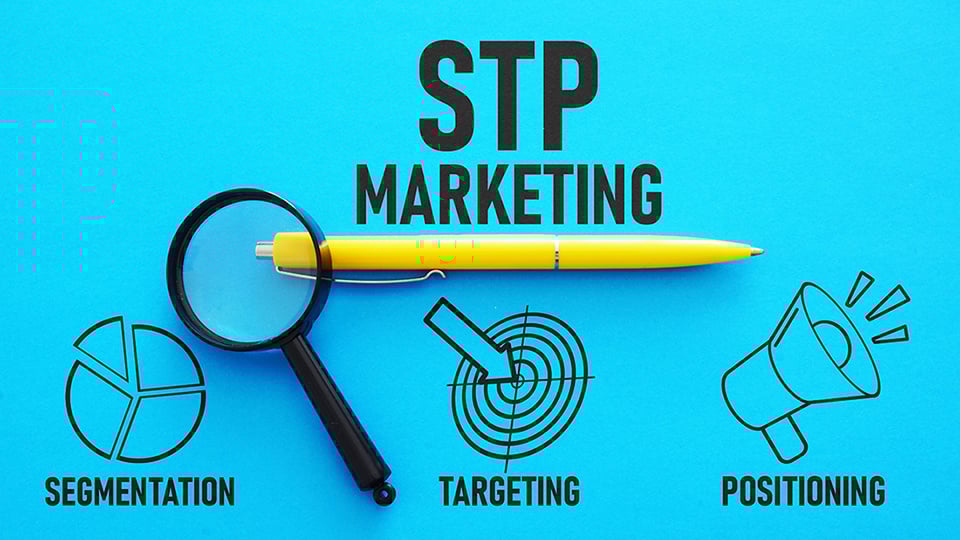
STP analysis is an analysis conducted from the three perspectives of "Segmentation," "Targeting," and "Positioning. The purpose of STP analysis is to organize customers and their needs, and to clarify the company's position in the market.

When conducting STP analysis, the market is first segmented using geographic, demographic, psychographic, and behavioral variables. Then, as targeting, a target market is selected from among the segmented markets, and the position in the target market is clarified as positioning.
20221025_02-2

Maintain consistency of each element

In the 4C analysis, there is a need for each element to mesh with the results of the STP analysis.
For example, if you pursue more customer value than necessary for a need, or if the cost is too high because of this, the product will be difficult or impossible for customers to purchase.

For example, if you want to sell concert tickets targeting the elderly, and the only sales method is an e-commerce site, this is not a convenience measure. Therefore, it may be necessary to make it possible for customers to buy tickets with a single phone call or to order from a terminal at a convenience store.

Explanation of the successful "Starbucks" case study using 4C analysis.

Starbucks is a well-known example of 4C analysis. The following is a description of what the company has done, broken down into four components.

[Customer Value]
Starbucks' customer value is "a place where people can casually gather" and a "third place" that is neither at home nor at work. To achieve this customer value, Starbucks offers a menu of beverages including authentic coffee and food items that can be enjoyed casually, and has created a space where customers can easily stay by using comfortable sofas for seating.

[Cost]
The affordable price of a few hundred yen allows customers to enjoy an authentic coffee experience, meeting the needs of customers who are looking for an upscale experience.

[Convenience]
Based on the "Main & Main" location strategy, we choose locations with high foot traffic and open stores near or inside train stations in urban areas. In the suburbs, Starbucks is opening drive-through stores on busy roadsides.

Starbucks stores are located throughout Japan, but they are particularly concentrated in areas such as Chiyoda, Minato, and Shibuya wards, where people are sensitive to trends and fashion and have relatively high income levels.

[Communication]
Each store is famous for the high standard of customer service provided by its staff, who are not only knowledgeable about coffee, but may also offer special touches such as writing a message on the cup on the spot. In addition, in some areas, they hold workshops and other events to actively communicate with customers.

In addition, the company does not use mass media to disseminate information, but rather utilizes social networking services to expand awareness of new products.

See: Starbucks Coffee Japan, "Our Mission and Values," 
https://www.starbucks.co.jp/company/mission.html

Summary

The 4C analysis is a useful framework in marketing products and services to gain market acceptance from the customer's perspective.

The key to actually conducting a 4C analysis is to clarify the target customer, select an appropriate target market, and define the position your company is aiming for. Then, by combining targeting and STP analysis, an optimal marketing strategy can be developed.

Do you have a business enquiry?
Document Request Contact Us