

Marketing consultant and lecturer
Director, Kanamori Marketing Office Ltd.
Part-time Lecturer, Faculty of Economics, Aoyama Gakuin University
Academic member of the Consumer Action Research Society of Japan
Studied marketing at university and started her career at a call center. He was exposed to the "real voices of customers" and became fascinated by the fascination of consumer behavior. After working for a consulting firm and an advertising company, he became independent in 2005. He provides marketing strategy planning consulting and marketing training to companies. He is the author of the book "Revised Edition of the Illustrated Guide to Future Marketing" (Dobunkan Publishing Co., Ltd.). He believes that the key to marketing is the "customer's viewpoint.
Tsutomu Kanamori
The "mono-consumption" behavior began during the high-growth period (1965-1973), the germ of consumer culture, and continued through the bubble economy period (1986-1991). Later, after the market matured and the market was overflowing with goods in the 1990s, consumer interest shifted to "koto consumption." In recent years, "toki consumption," which is a further evolution of "toki consumption," and the latest trend, "imi consumption," have been attracting attention.
1. goods consumption
Mono-consumption" is defined by the Ministry of Economy, Trade and Industry as "the consumption of the functional value of products and services," and refers to the consumption trend that emerged from the post-World War II period through the high-growth period.
Mono-consumption began with "acquiring the minimum necessary goods" during the high-growth period. Subsequently, people sought "a life as good as others" and "a more convenient and comfortable life," and during the bubble economy, they tried to achieve "an even better life" by "fulfilling their needs for things.
Examples of Mono Consumption
An example of mono-consumption is the electric washing machine, electric refrigerator, and black-and-white TV, which were called the "three sacred treasures" and purchased by an increasing number of households during the high-growth period. Subsequently, technological advances led to the mass production and diffusion of color TVs, coolers, and private passenger cars for household use, which came to be known as the "3C's," the first letters of each. This was mono-consumption (desire for things) oriented toward more affluent lifestyles, which escalated into the purchase of brand-name goods during the bubble period.
2. cost consumption
The collapse of the bubble economy cooled the desire for goods, and the idea that "experiences that define disposable time as 'wealth'" are indispensable for "affluent living" became widespread. In other words, "koto consumption," in which time and experiences are consumed through the purchase of goods and services. While mono-consumption was paying for the "functional value" of a product, koto-consumption summarizes the trend of consumption in which people pay for the experiential value of a product.
Tetsuya Kawakami's book, "The Lie of 'Koto Shohsei'" (Kadokawa Shinsho), classifies koto shohsei into seven types: "pure experience type," "event type," "attraction type," "time stay type," "community type," "lifestyle type" and "shopping excitement type.
Examples of Coto Consumption
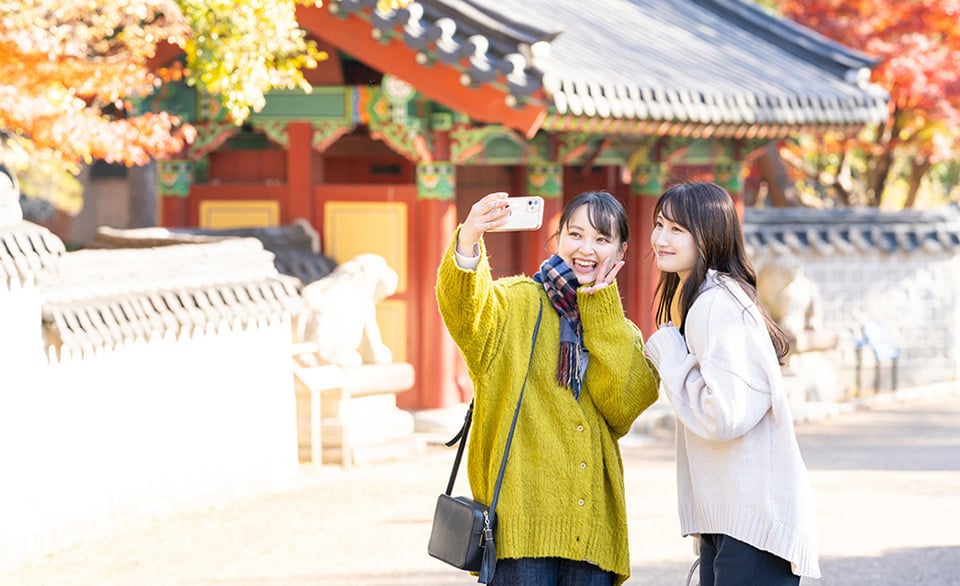
In many cases, what is called "koto consumption" is "pure experiential consumption," in which "experiential consumption itself" is the product. These include simple things such as "visiting shrines and temples," "experiencing activities in the mountains, rivers, and ocean," and "participating in events such as live concerts, festivals, and fireworks shows," as well as "experiencing traditional culture such as kimono dressing, calligraphy, and pottery making," "pop culture represented by cosplay," and other cultural experiences unique to Japan. and "pop culture" such as cosplay.
3. ibis consumption
In the 2010s, when "kotoconsumption" has become firmly established, we began to see a trend that cannot be explained simply by "paying for experiential value. The Hakuhodo Institute of Life and Living proposes the concept of "Toki consumption," which refers to "consumption to enjoy the excitement that can only be experienced at that time and place.
Toki consumption has three requirements: non-repeatability (the experience is limited in time and place, so the same experience cannot be had twice), participation (sharing the experience and excitement with an unspecified number of people), and contribution (the sense that one is contributing to the excitement). In other words, the value in Toki consumption is the "value of participation," which is based on the need to "participate in Toki that is created together with others.
Background of increased ibis consumption
One of the biggest reasons for the increase in toki consumption is the proliferation of online tools, especially smartphones and social networking services. In today's world where people can connect with an unspecified number of people anytime, anywhere online, the hurdle to sharing time and place has become extremely low. The three requirements of Toki consumption - non-repeatability, participation, and contribution - have a high affinity with online, and it can be said that "the spread of online tools has increased Toki consumption.
Case Study of Toki Consumption
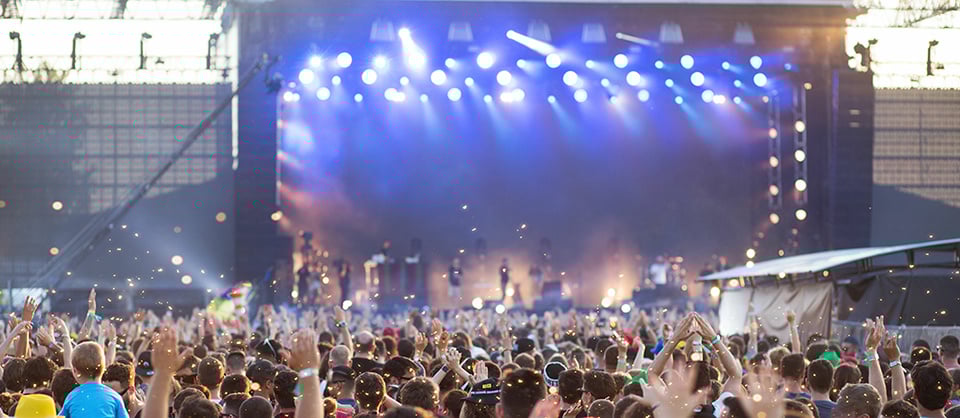
Typical examples of Toki consumption include "festival live performances" where the audience sings and dances to enliven the event, "movie support screenings" where people cheer on the audience by cosplaying, shouting, and clapping, "crowdfunding" where corporate product development is made possible through donations from consumers, and "general election-type campaigns" where people vote for their favorite idols and products. These are representative examples of Toki consumption.
4. imitative consumption
Imi consumption" is a concept proposed by Mr. Kuni Takeda, an evangelist at Hot Pepper Gourmet Food Service Research Institute, and refers to "consumption behavior that emphasizes the social contribution aspects that come from consuming certain products.
For example, "environmental preservation," "contribution to the community," "fairness," "historical and cultural legacy," and "health maintenance" are some of the keywords. or "How should I be? The ibis consumption is a characteristic of economic activities based on these keywords.
Toki consumption is characterized by the desire to spread the excitement on social networking sites and get "likes". (Maslow's five-step theory of needs), while imi-consumption is based on the "desire for self-actualization" to "become what one should be" in accordance with one's "view of socially just consumption," and can be described as a higher level of consumption.
Background of increased immi consumption
The background of "imi-consumption" is said to have started with the support for the areas affected by the Great East Japan Earthquake in 2011. It is an attempt to contribute to the support of others and the revitalization of local communities by providing assistance to the affected areas, in other words, by adopting a "socially just consumption perspective. It is also supported by the growing global efforts for SDGs, which have focused attention on environmental conservation and fair trade.
Examples of imminent consumption
In terms of regional contribution, "Furusato" is a prominent example. It is said that among crowdfunders, products that contribute to local communities and social justice attract a lot of support. In addition, there is interest in carbon offsetting and pesticide-free and chemical-free products due to the SDGs, and fair trade products, such as those made from cotton originating in developing countries, are also gaining popularity.
See also:
Ministry of Economy, Trade and Industry Regional Economy and Industry Group|Survey on Measures to Revitalize Regional Economy and Industry in FY 2015
https://www.meti.go.jp/committee/kenkyukai/chiiki/koto_shouhi/pdf/report_01_02.pdf
Ministry of Economy, Trade and Industry Regional Economy, Trade and Industry Group|Comparative Report of the Study Group on Creating Spaces for Cotto Consumption: Building a Regional Cooperative System with a Management Organization at the Core
https://www.meti.go.jp/committee/kenkyukai/chiiki/koto_shouhi/pdf/006_02_00.pdf
Nissay Research Institute|Contemporary Consumption Trends: Consumption of Things, Symbols, Things, Toki, and People from the Perspective of Consumer Culture
https://www.nli-research.co.jp/report/detail/id=69930?pno=2&site=nli
Infinity|Potential Future Lifestyle Products: From the Perspective of Youth and Generational Marketing
https://www.meti.go.jp/shingikai/mono_info_service/seikatsu_seihin/pdf/004_04_00.pdf
Hot Pepper Gourmet Food Service Research Institute|The Changing "Quality" of the Food Service Market: How to Read the Market and Refine Added Value (First Half)
https://www.hotpepper.jp/ggs/seminar/article/seminar/20180125_1