



Small Business Consultant/MBA/Attractive Branding Coach
President of Iris Planner, Inc.
As a management consultant specializing in marketing with 27 years of experience in marketing for foreign brands,
Management strategy, marketing support and online for over 250 clinics and entrepreneurs He has supported more than 250 clinics and entrepreneurs in their business strategy, marketing support, and online business development.
Miyoko Okuno
Market research refers to "understanding the current market through numbers and figures and developing a marketing strategy (a strategy on how to sell a product).
For example, suppose you were trying to develop a new car. In order to sell it, you must understand the needs of your customers and create a product. In market research, we gather information and trends that we need to know, analyze them, and use them in product development.
Examples of things to look for include.
-Percentage of the population owning cars
-Number of cars owned per capita
-Price spent on one car
-How many years after purchasing a car do people tend to replace it
-What aspects of the car they purchase are important
-Number of manufacturers (competitors) currently selling cars
-Market share of each manufacturer (competitor) in the car industry
Market research involves There are a variety of formats, but in general, the initial stage focuses on personal opinions and facts, and surveys such as questionnaires are used to obtain data. Later, it is said that the more specific analysis stage often focuses on overall customer trends and statistical figures.
In addition, there are several market research methods. Here are some of the typical survey methods.
quantitative survey
We collect data by interviewing and surveying consumers and potential customers in person, by mail, by telephone, and on the Web. This is the most typical method of market research. The most commonly used method is Internet research, in which survey responses are requested via the Internet. The advantage of this method is that it is less burdensome for respondents because it is conducted over the Internet, and it allows us to collect a large sample more efficiently at a lower cost and in a shorter period of time than other surveys. Another advantage is that surveys can be conducted using not only text, but also images, photos, and videos. Disadvantages include the difficulty of obtaining responses from the elderly and other generations that are less likely to use the Internet, the low reliability of responses when the relationship between the product or service and the respondent is low, and the difficulty of surveying highly confidential information.
qualitative study
This is a research method in which group interviews are conducted with a group of people who share common attributes (age, gender, occupation, etc.) to elicit customers' true intentions and opinions that they could not recognize in themselves. Specifically, we ask a group of 4 to 6 survey participants to gather together, and a facilitator called a moderator (interviewer) conducts the interview. The advantage of this method is that it provides qualitative information such as users' opinions and impressions, which is difficult to obtain in a survey. Questions can be changed on the spot depending on the respondents' responses. The disadvantage is the time and cost required to set up the venue and gather participants. Also, if there is a participant with a large influence, it may influence the thinking of other participants.
undercover investigation
This is a method in which a third party actually uses the service as a consumer and provides information to the client. The purpose is to objectively grasp the current situation, even to the point of not being noticed onsite, in order to improve quality. It is known as an effective means for upper management to grasp the actual situation at chain stores in the restaurant and other service industries. In recent years, the term "mystery shopper" has gained public recognition, and the historic French Michelin Guide and other guides have long used this method of surveying. Specifically, surveyors use stores as regular customers and evaluate the quality and satisfaction of products, services, and customer service. In some cases, the survey covers the entire process, from the ordering stage to the arrival of the product and its actual use. The advantage is that the survey items can be set according to the issue and the survey report can be used to improve the product or service. The disadvantage is that if the survey results are not very good, the employees who responded to the undercover survey may lose motivation, and the survey itself may be perceived as harassment.
Statistical Data Survey
Based on statistical data surveyed and published by governments, universities, and other public organizations, we can assign numerical values and research statistical data according to the attributes (age, gender, occupation, etc.) of our target customers. Also called desk research, it can be conducted based on data from websites or existing in-house materials. It is suitable for researching market and industry trends on the theme you want to study. Common methods include "searching the Internet using keywords you want to study" and "collecting existing materials and statistics on the Web. The advantage is that you can gather a wide range of information without spending much time. The disadvantage is the risk of not being able to utilize the data if the authenticity of the information is unknown or if there are copyright restrictions.
A combination of these methods is used to conduct market research.

The market research explained above can be considered a part of marketing research.
Although they are often used to mean the same thing in Japan today, strictly speaking, market research is "to know current market trends through data and figures," whereas marketing research is more broadly defined as "forecasting, analysis, and consideration of future market trends. Some technical books also explain that "market research is to examine the market statistically, while marketing research is to examine the market in terms of national language.
Various data exist in the form of numerical values for the past and present. However, we must use past data to predict market trends for tomorrow and beyond, and make decisions based on our "guesses. In this case, the methods used in market research mentioned above are also applied to marketing research, but there is a clear difference in how the results are used.
For example, suppose we ask the question, "Are you satisfied with the car you currently own?" If the question is "Are you satisfied with the car you currently own?
If the answer is "I am satisfied" and the reason given is "I like the design," then the potential customer needs can be gauged and a product with a better design than the existing product can be developed, which will likely lead to more sales. In this way, marketing research detects cause-and-effect relationships from the data collected and identifies customer needs that have not yet emerged.
Unlike market research, marketing research includes research on advertising and distribution in addition to product content.
Product Testing
This is a research method in which customers are asked to actually use a new product or a target product that is already on the market to find out what they think of it. The survey will highlight issues such as what customers think of the new product and what improvements can be made to increase sales.
Pre- and post-surveys
This research method is used when you want to measure the effectiveness of an advertising campaign, such as an event, by comparing the results of pre- and post-implementation surveys. It is also used for product testing to see changes in purchase intention before and after a product trial.
Home Use Test
This is one of the product tests. Testers (trial products) are distributed to each household for them to use for a while and record the results. At the end of the test period, the testers are asked to submit their records, and supplementary questions are asked to obtain their opinions about the product. This is a useful research method because it allows us to hear the opinions of customers in a way that is closer to the actual use of the product, since the test is conducted in their daily lives.
Package Testing
This is a test regarding the design, color, ease of use, and material of the product container. We gather opinions and impressions from customers about the packaging, whether they actually want to buy the product, whether it stands out in stores, etc., and use this information as hints for product development.
Naming Test
The test asks the customer to choose which of several possible names is appropriate for the product, and to give their opinions and impressions of the several possible names.
test marketing
This test is to actually market the new product and observe how the sales of the new product are doing. Targeting a medium-sized city, we will place the product in an environment equivalent to a national launch to see how it responds to publicity, advertising, and promotional events. During this period, surveys of customers and retailers will be conducted in parallel to measure product awareness, purchase rate, market share, retailer handling rate, and advertising effectiveness. Based on the results, we will develop measures for a nationwide launch and forecast future sales volume and sales.
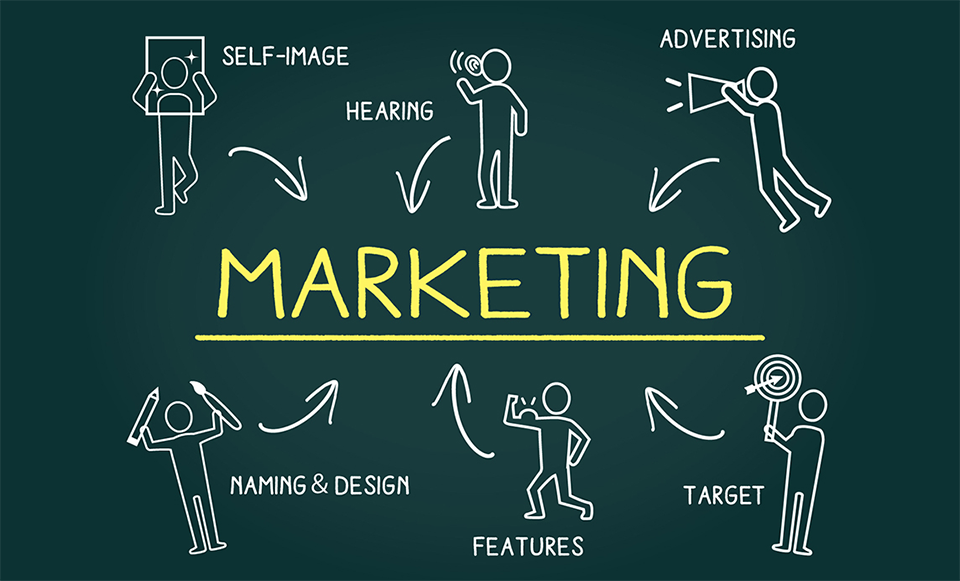
What exactly does market research look like? We will introduce two examples of utilization based on surveys conducted by Cross Marketing.
1. CORE (Comprehensive Lifestyle Survey of Sei-katsu-sha)
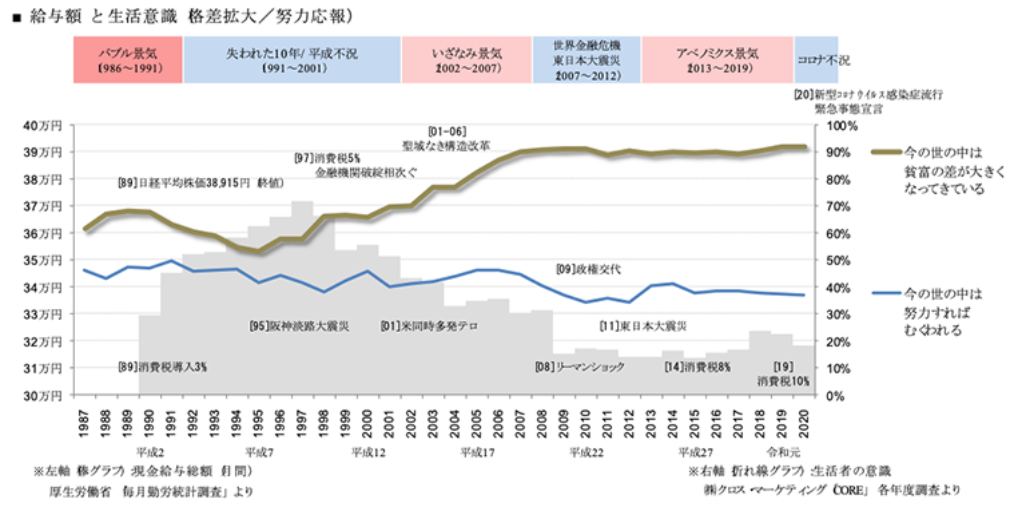
This is a survey that has been conducted continuously for over 30 years on trends in sei-katsu-sha attitudes and values. Every year in October, we survey 3,000 people (by gender and age) living in the Tokyo metropolitan area on lifestyle awareness and behavioral items.
The survey has been conducted for 30 years since the beginning of the Heisei Era (Heisei Era: the beginning of the Heisei Era is the end of the bubble economy, followed by recessions and booms, and the baby boomers who were in their prime at the time of the survey have now reached retirement age.
The graph below is an example of the survey results, showing changes in salary and lifestyle awareness over the past 30 years, and shows that the percentage of those who think the wealth gap has widened since the 2000s has increased.
Source:
Cross Marketing, Inc.|CORE (Comprehensive Consumer Lifestyle Survey)" to explore consumer insights
2. senior report
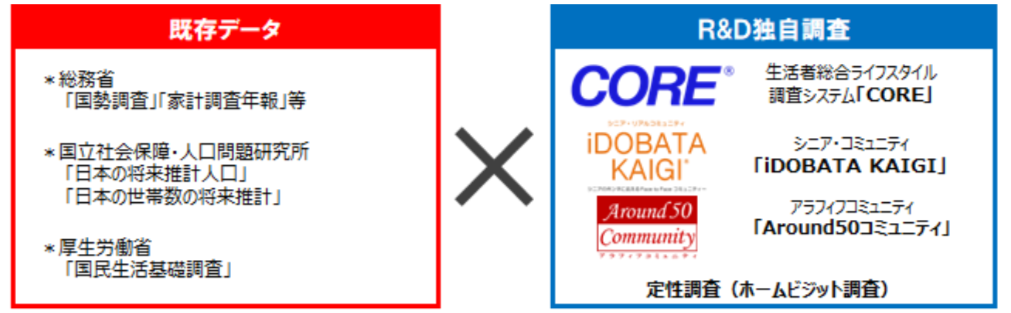
This report provides a complete picture of senior consumers, created by combining publicly available government data with original market research. It summarizes the economic situation of seniors, their lifestyle awareness and behavior, health, eating habits, and living conditions.
When conducting market research in-house, it is effective to use already researched data like this and conduct additional research only on the missing parts, or combine it with other research data for analysis.
There are many publicly available government statistics. Four representative examples are the "Population Census" and "Annual Report on Household Survey" by the Ministry of Internal Affairs and Communications, "Population Projections for Japan" by the National Institute of Population and Social Security Research, and "Basic Survey on National Living Standards" by the Ministry of Health, Labour and Welfare. These survey materials can be accessed through e-Stat, a portal site for government statistics.
Source:
Cross Marketing, Inc.| "Senior Report," an overview of 2021's seniors in one volume
e-Stat|Statistics on Japan
https://www.e-stat.go.jp/